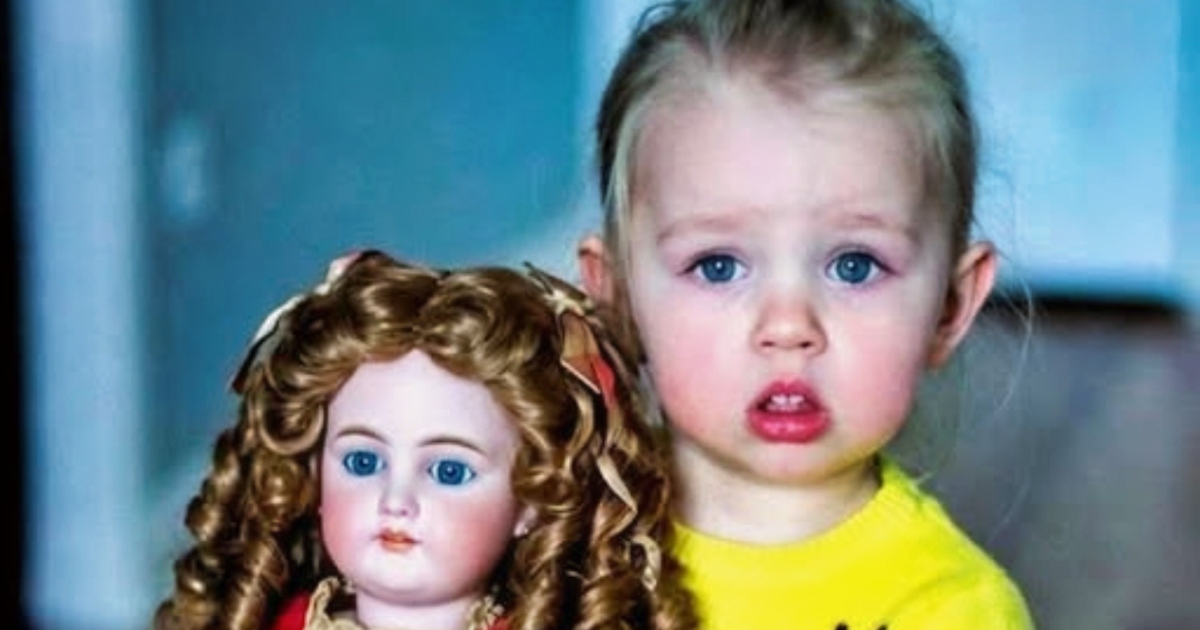
Pauline, a 34-year-old single mother, had always tried to shield her daughter Eve from life’s harsh realities. Since Eve’s father had died of cancer three years earlier, the two had been inseparable, barely scraping by on Pauline’s cleaning salary. Eve had just turned six, and Pauline wanted to make her birthday special, even though the bills were piling up and the world seemed difficult. She was strolling through the flea market with 20 dollars in her coat pocket, looking for something meaningful, when she spotted a vintage doll perched delicately among dusty candlesticks. The doll’s blue eyes seemed almost alive, and she held a smaller baby doll in her arms. Without asking any questions, Pauline knew instantly she had to take it home.
Eve’s reaction to the doll, which she named Rosie, was pure joy. She hugged the toy tightly and admired the tiny baby doll it held. But soon Pauline noticed something unusual—a soft, rustling sound that seemed to be coming from Rosie. Nestled in the doll’s seams, Pauline discovered a folded note and a red paper heart. Written in a child’s handwriting were the words: “Happy Birthday, Mommy.” The doll had a recording, and the voice of another child—the daughter of another family—filled the room. The revelation was bittersweet; what had been intended as a gift for Eve carried a hidden story of grief and love from another family.
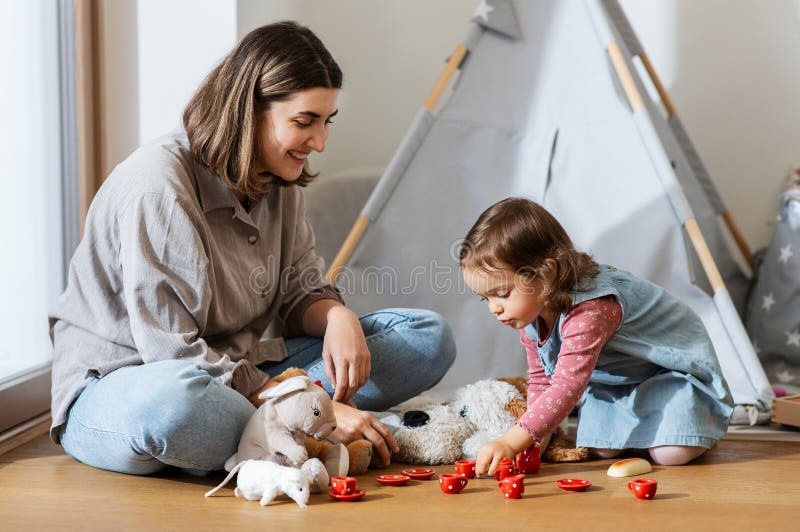
The next day, Pauline returned to the flea market with the doll, hoping to find answers. There she met Miriam, the doll’s original owner, who froze when she saw Rosie. Tears welled in her eyes as she explained that her daughter Clara had died shortly before her eighth birthday and that Rosie had been her last gift. Miriam had never played with the doll before; now, through Pauline, she could hear her daughter’s voice again. The two women were bound together by grief and love, united in the fragile, silent magic of the doll that preserved Clara’s memory.
In the following weeks, Miriam became a gentle presence in their lives. She visited often, bringing old picture books, puzzles, and small traditions that had once belonged to Clara. Eve loved listening to Miriam’s memories, and their home filled with laughter and connection. Pauline watched, deeply moved, as her daughter formed a bond with a woman who had experienced loss so intimately. The doll had connected two families and carried more than just plastic and fabric—she carried love, memory, and the invisible threads that bind hearts together across time.
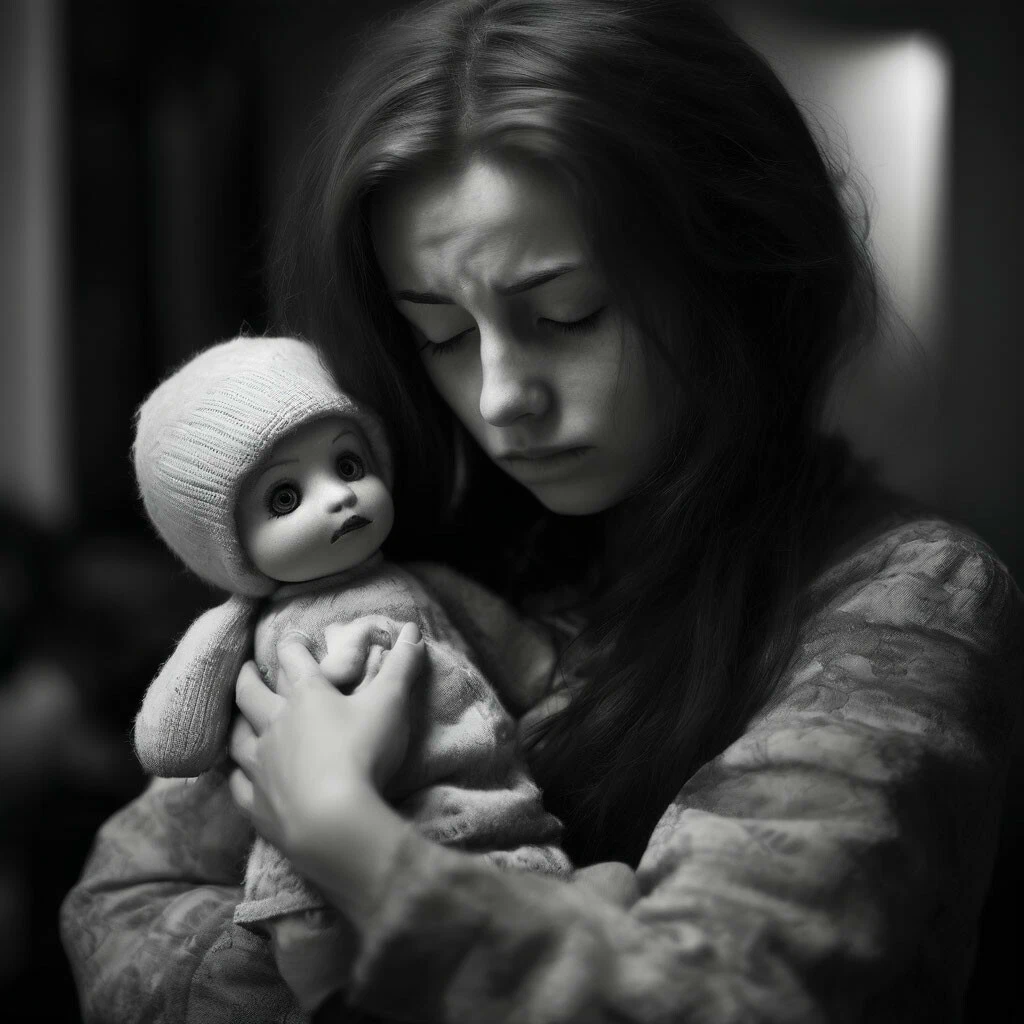
One evening, Pauline found a small drawing on the kitchen table, one that Eve had made. It showed three figures: a little girl, Miriam with her blue scarf, and Pauline herself. Beneath it, in flowing handwriting, Eve had written: “Mom, Miriam, and I.” Pauline wept softly, not from sadness, but because the space that had once been filled with grief had now been filled with love. Through Rosie, a small doll from the flea market, two families had found a way to honor the past, embrace the present, and open their hearts to new connections—a reminder that even loss can make room for unexpected joy.